

I am an environmental specialist with the town of North Hempstead in Long Island, New York. Our town has taken the Mayors’ Monarch Pledge with National Wildlife Federation, so I have been involved with pollinator and monarch butterfly conservation since 2018.
I can’t remember exactly how I found out about MLMP, but I’m sure it had something to do with outreach by the Monarch Joint Venture, as I am always watching their very informative webinar series. The first year I volunteered with MLMP was for the International Monarch Monitoring Blitz in 2019. I really didn’t know what to expect, but I was excited and surprised to find a bunch of monarch eggs and larvae on the common milkweed plants in the pollinator garden at Clark Botanic Garden, which the town owns. From then on, I was hooked and began monitoring every year.
Clark Garden is a 12-acre site that contains a variety of gardens, including native perennials and trees, ponds, and a rain garden. This site has an abundance of wildlife, including birds, small mammals, amphibians, reptiles, and a wealth of insects and invertebrates. It is a designated Monarch Waystation with Monarch Watch, which means it has all the resources needed for monarchs to complete their lifecycle and sustain their migration. Clark Garden is also a historic site, which was the home of Grenville Clark, a Wall Street lawyer, and his wife, Fanny Clark, from the 1920s to the 1960s, when it was donated to Brooklyn Botanic Garden. The town of North Hempstead acquired it in 1989.
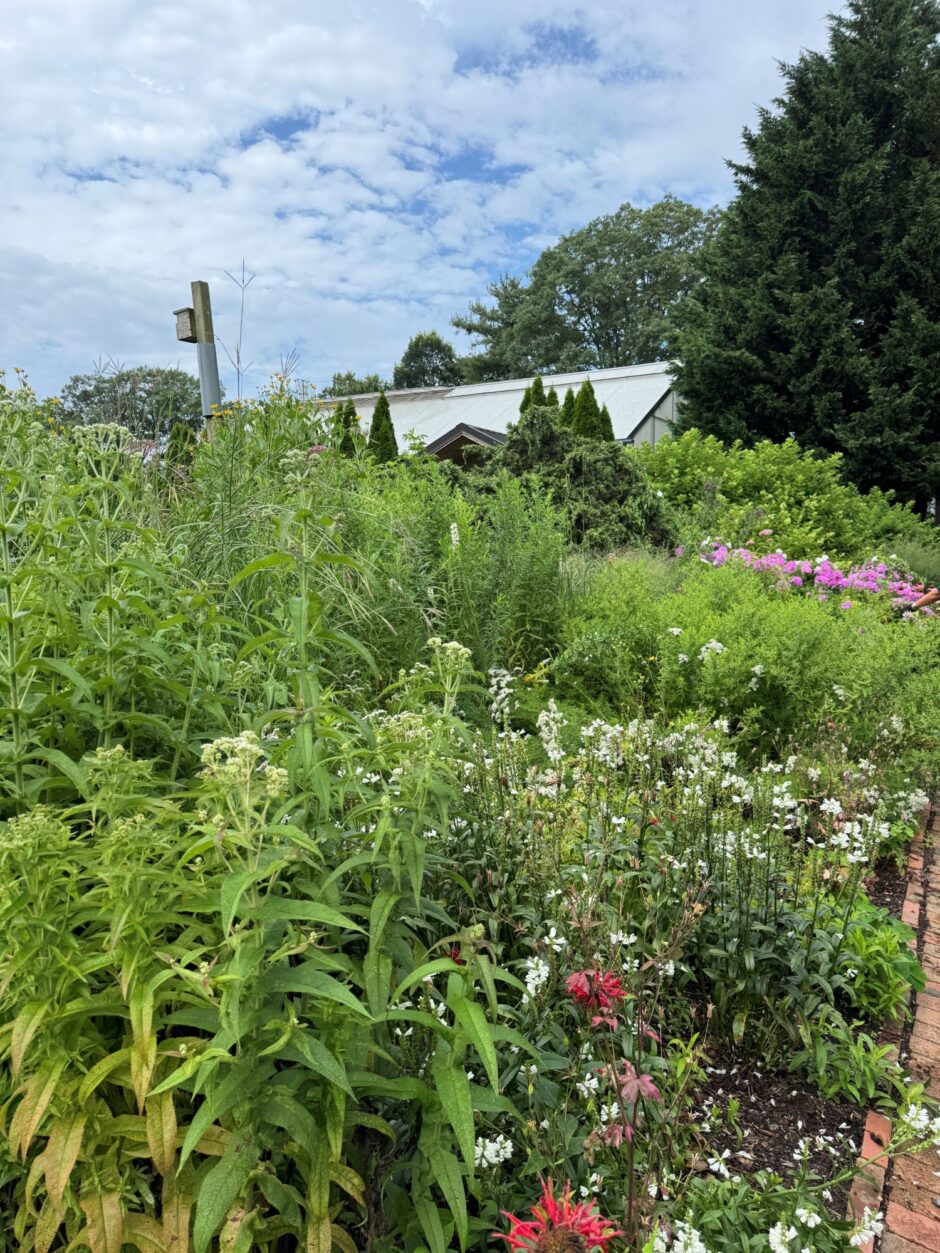
I monitor the pollinator garden, which contains 90% of the milkweed at the site, as well as a few patches where milkweed has spread throughout the property. A couple of years ago, we renovated this garden to contain only native plants, including adding two more species of milkweed (swamp and butterfly weed) to not only provide for the larvae, but for the adults visiting the garden and the many other pollinators that use these resources. When monitoring, I often see curious visitors who may be a little confused as to what I am doing. It is really great to explain the importance of MLMP and the plight of the migratory monarch population. Many people don’t know that monarchs are in decline, and I hope sharing this knowledge will lead to others helping in some way.
My work on the Mayors’ Monarch Pledge involves a lot of outreach, which includes public workshops, creation of press releases, social media posts, and more. To further spread the message, I hosted an MLMP training at Clark in 2024 with NY Sea Grant’s Community Science series to get Long Island residents involved in the project.
Monitoring over the past six years has always been unpredictable, but this keeps it fun! When I go out to monitor, I never know if I’m going to see a lot of monarchs or none at all. Even if I don’t see monarchs, I am amazed at the milkweed ecosystem and all the other insects and invertebrates I see as I check under every leaf of each plant. I try to photograph as much as I can and use iNaturalist to identify them. MLMP has taught me so much about the little creatures that are living with us that you may not see until you really look for them. I can’t wait to see what’s in store when monitoring again this year!
Back to all articles