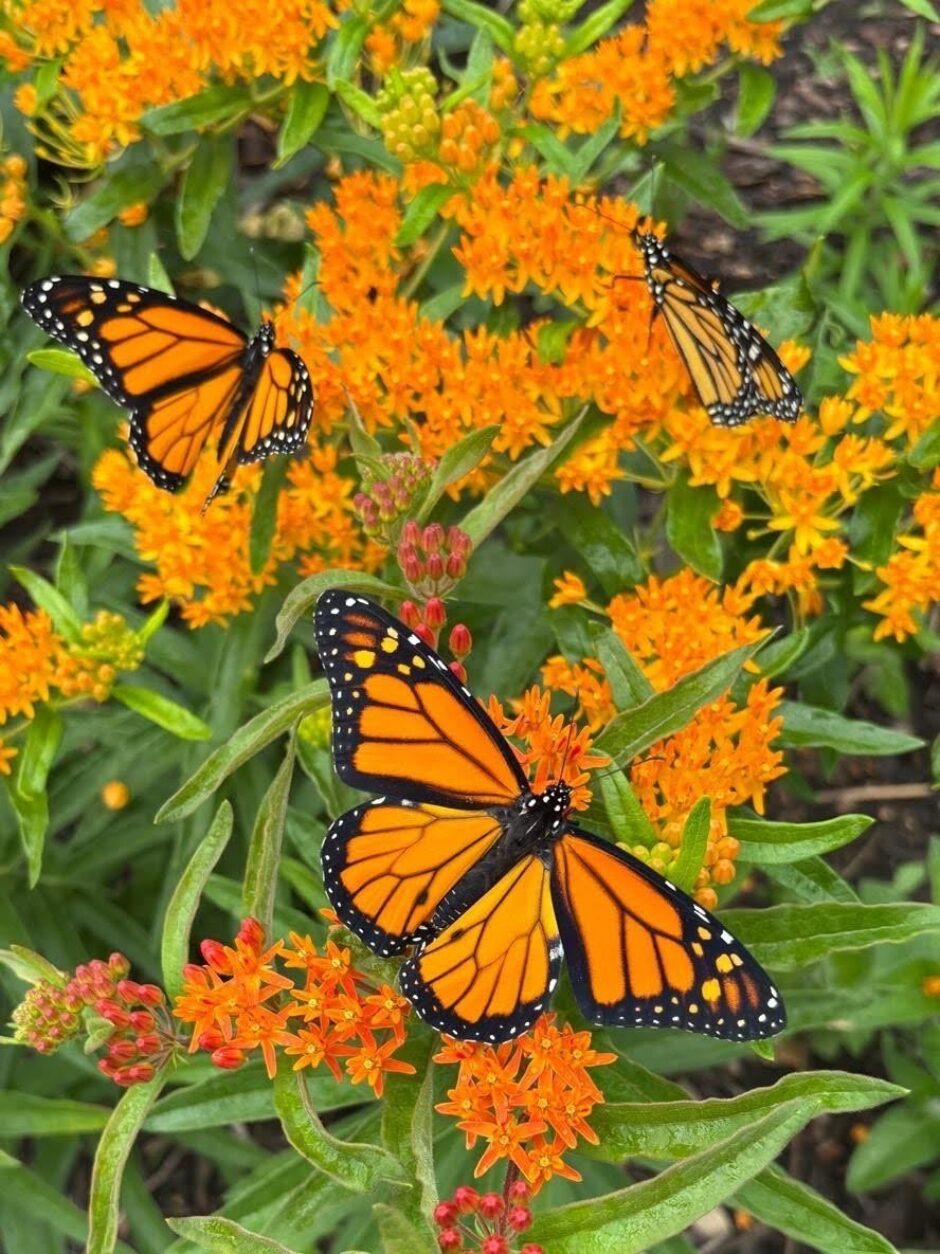

If you’re starting to see more adult monarchs, it’s not just wishful thinking.
The first 2026 monarch generation began as eggs in the southern U.S., the offspring of monarchs that had overwintered in Mexico. These first-generation monarchs continued the journey northward that their parents had begun, arriving in their northern breeding grounds in late April and May.
Unlike their parents, who had spent the winter in Mexico, these monarchs began laying eggs when they were about four days old. As they moved northward, they laid eggs on milkweed plants across a broad geographic range. By late June, the first 2026 generation had mostly died off, and we’re beginning to see adults from the second 2026 generation (the first northern generation) emerging.
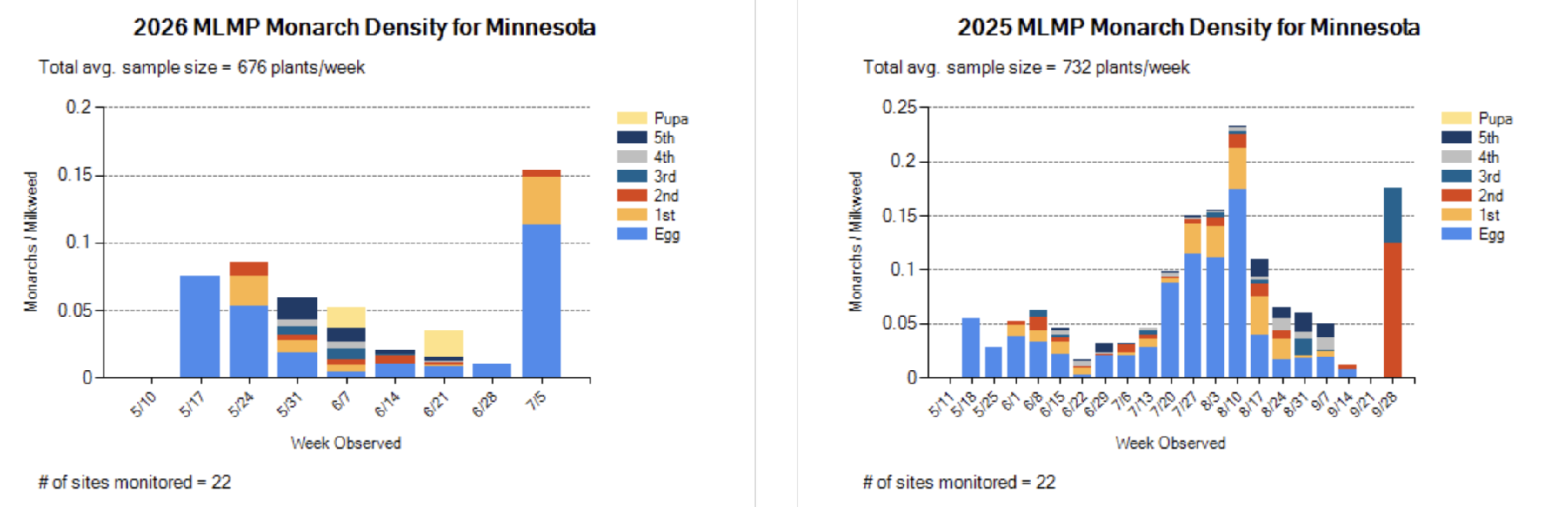
The emergence of this new generation is usually indicated by two things: upticks in observations of adult monarchs in good condition and in the density of eggs on milkweed plants as reported by Monarch Larva Monitoring Project volunteers.
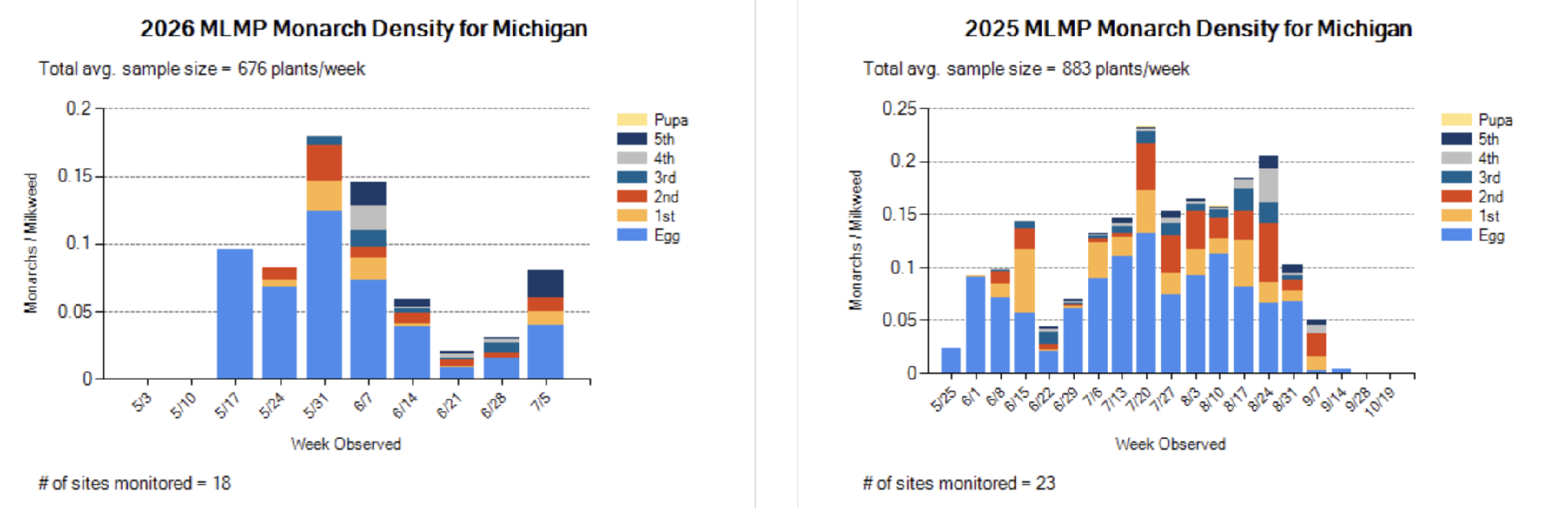
The uptick in adult numbers is just beginning, as evidenced in the 2026 graphs for Michigan and Minnesota, with 2025 graphs alongside them for comparison. As this new generation is emerging, please do what you can to ensure that they have plenty of high-quality habitat to support long adult lives (think nectar plants) and lots of egg-laying (think milkweed plants). And celebrate all of the adult monarchs that you see!
For MLMP data going back multiple decades from all states, see more graphs here.
To follow and help document what’s happening, keep monitoring your MLMP sites, report non-site observations on your MLMP main menu page, and report adult monarchs to Journey North. And get ready for the 2026 Monarch Blitz, taking place from July 31 to August 9. People from across North America can submit sightings to Journey North, while sightings from the western U.S. can also be reported to iNaturalist.