

In 2025, MLMP volunteers monitored 2948 times, and looked at 237,049 milkweed plants! Thank you to everyone who contributed to these impressive numbers.
We’d especially like to thank Jen Klotz and her team at the Wilmington State Park, Delaware, and the Huntington Park, Louisiana, Volunteers who monitored when it was 99ºF on June 23 in Wilmington and 98ºF on Sept 2 in Los Angeles! We hope that you drank plenty of water.
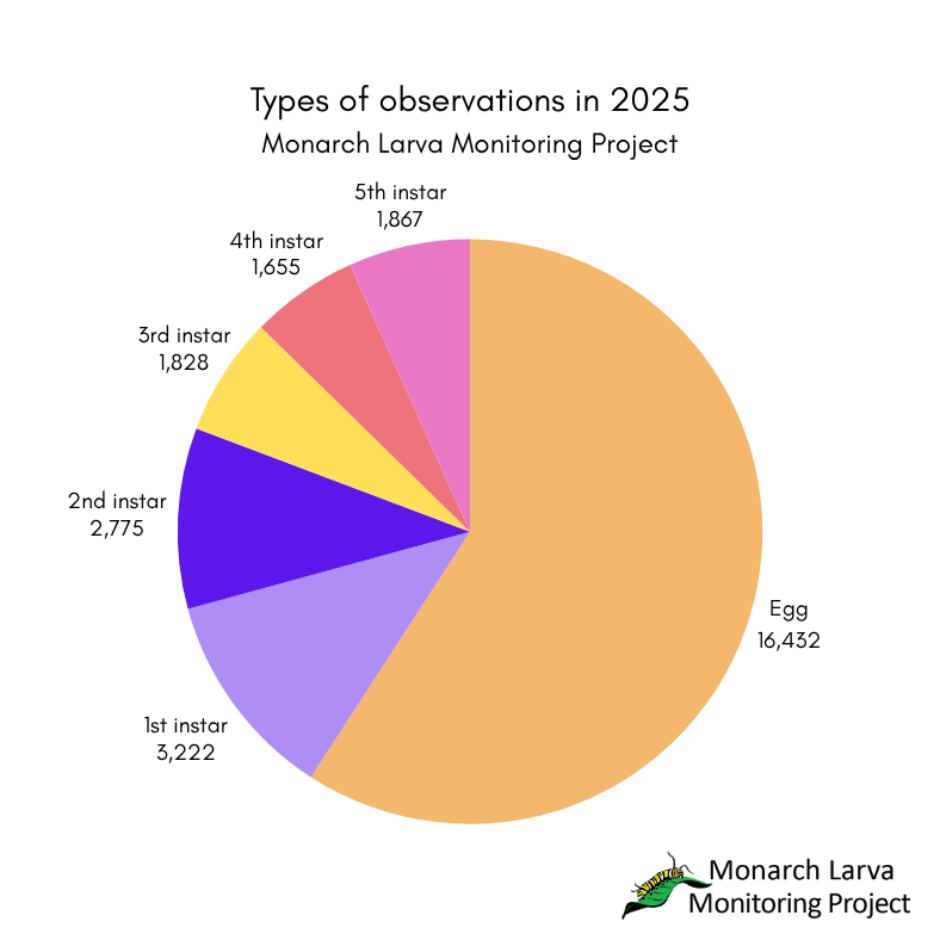
During those nearly 3,000 times of monitoring, you found a lot of monarchs on those 237,049 plants. Here are the 2025 numbers, divided by monarch stage. The majority of observations were of eggs (59.2%), followed by first instars (11.6%), then second instars (10%). Fifth instars were the third-most common (6.7%), followed by third instar (6.6%), and finally, fourth instar (6%).
Instars are the intervals between a monarch's molts. Each monarch has five larval instars. If you're not familiar with instars, read more here.
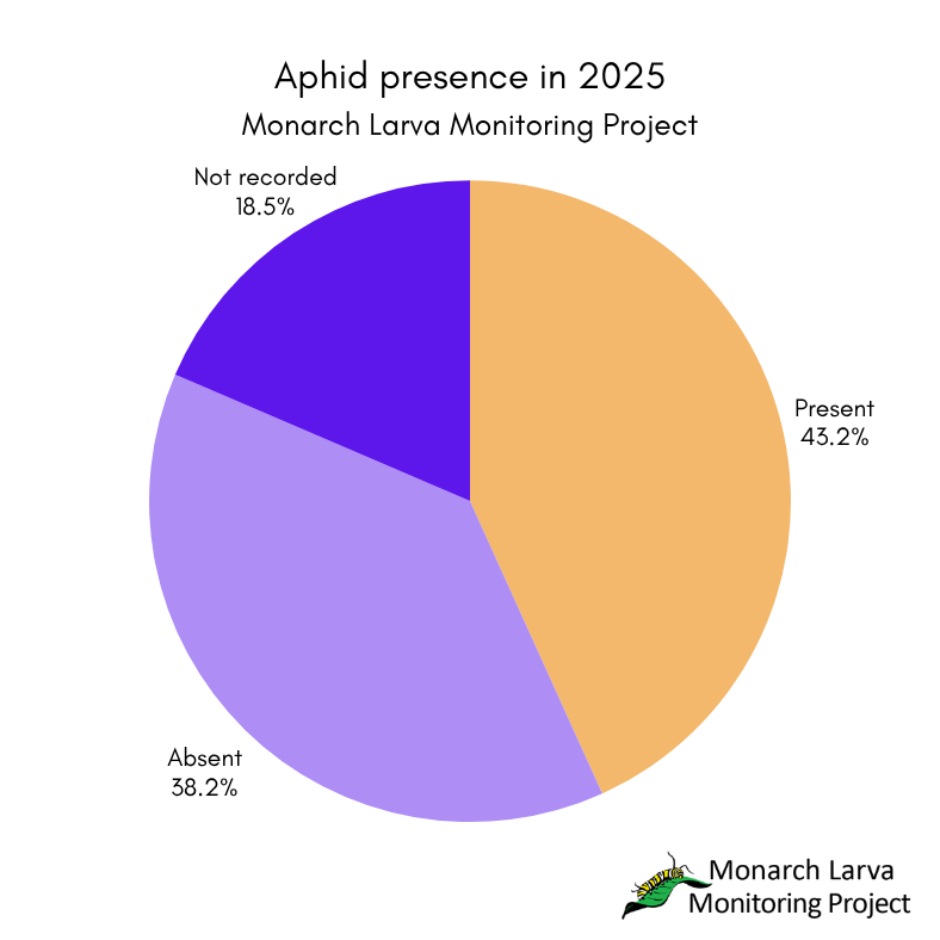
We don’t often report on Aphis nerii, the bright yellow, non-native oleander aphids that love milkweed, but here’s a snapshot of how many monitoring events included a report of these often unwelcome milkweed feeders in 2025.
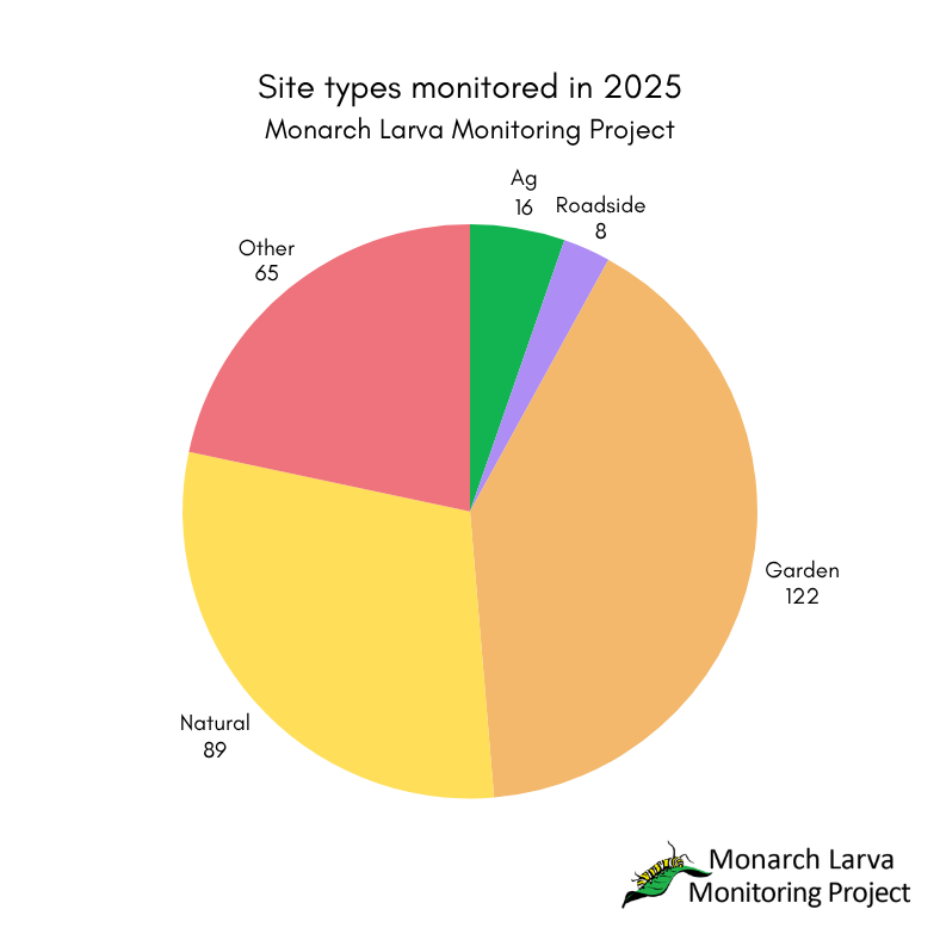
And here are the kinds of sites that you monitored. Ag land includes land in conservation programs, like CRP, land between fields, old fields, and pastures. Natural land includes restored or natural prairies and nature preserves. The "other" category includes everything from golf course roughs to zoos to military ranges.
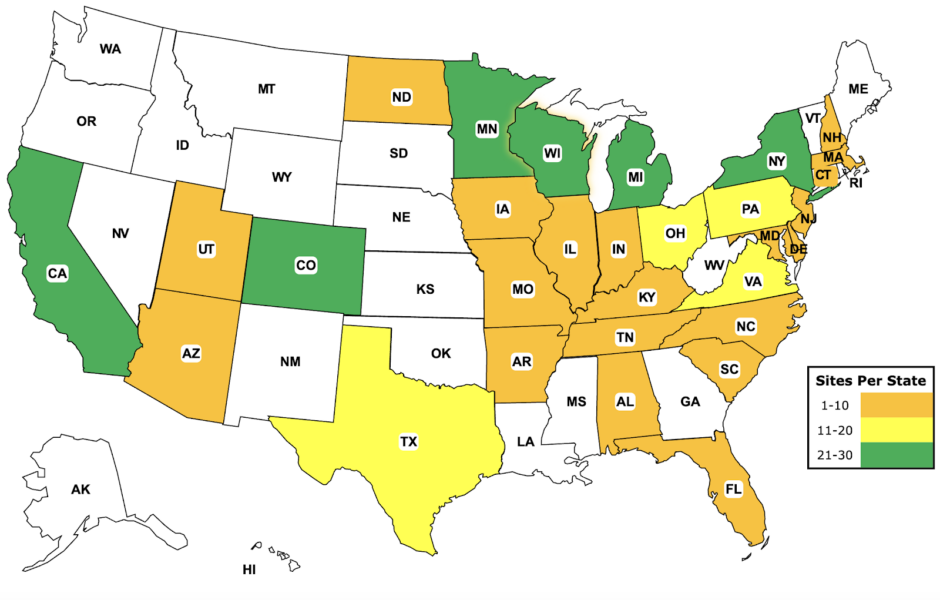
And here’s where you monitored in 2025:
Thank you for your participation in the Monarch Larva Monitoring Project!
Back to all articles