

Article by Meagan Fastuca
This month we are spotlighting a newer volunteer, Natalie Delchambre from Little Suamico, Wisconsin, who started in 2025 but has been able to accomplish so much in such a short time!
When Natalie moved to her current home in 2024, she noticed plants popping up in the existing garden beds but didn’t know they were common milkweed until a friend helped identify them. The milkweed brought monarchs to her yard, and she was able to rear eggs to adult butterflies with her four young children.
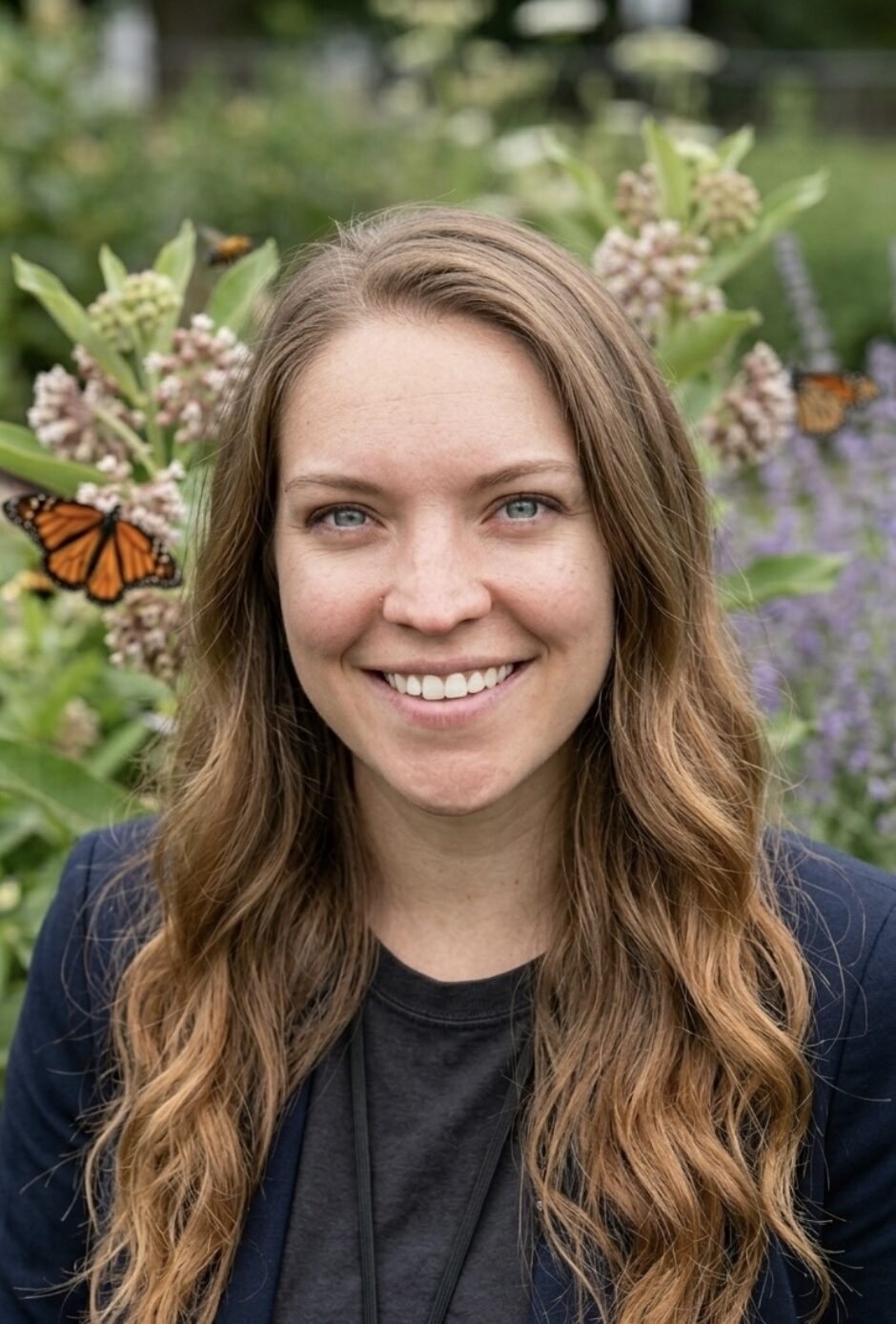
After experiencing the monarch's marvelous life cycle as a family, Natalie’s passion for helping monarchs grew. Combining this new interest with her passion for science she's had since grade school, Natalie looked for ways to expand her knowledge and see where her love of nature could take her. She searched online for projects and found the Monarch Larva Monitoring Project (MLMP). Natalie started monitoring at home, also known to her as Hippie Homestead, in 2025, and this year she started monitoring in Discovery Meadow, located at the local Oconto Elementary School.
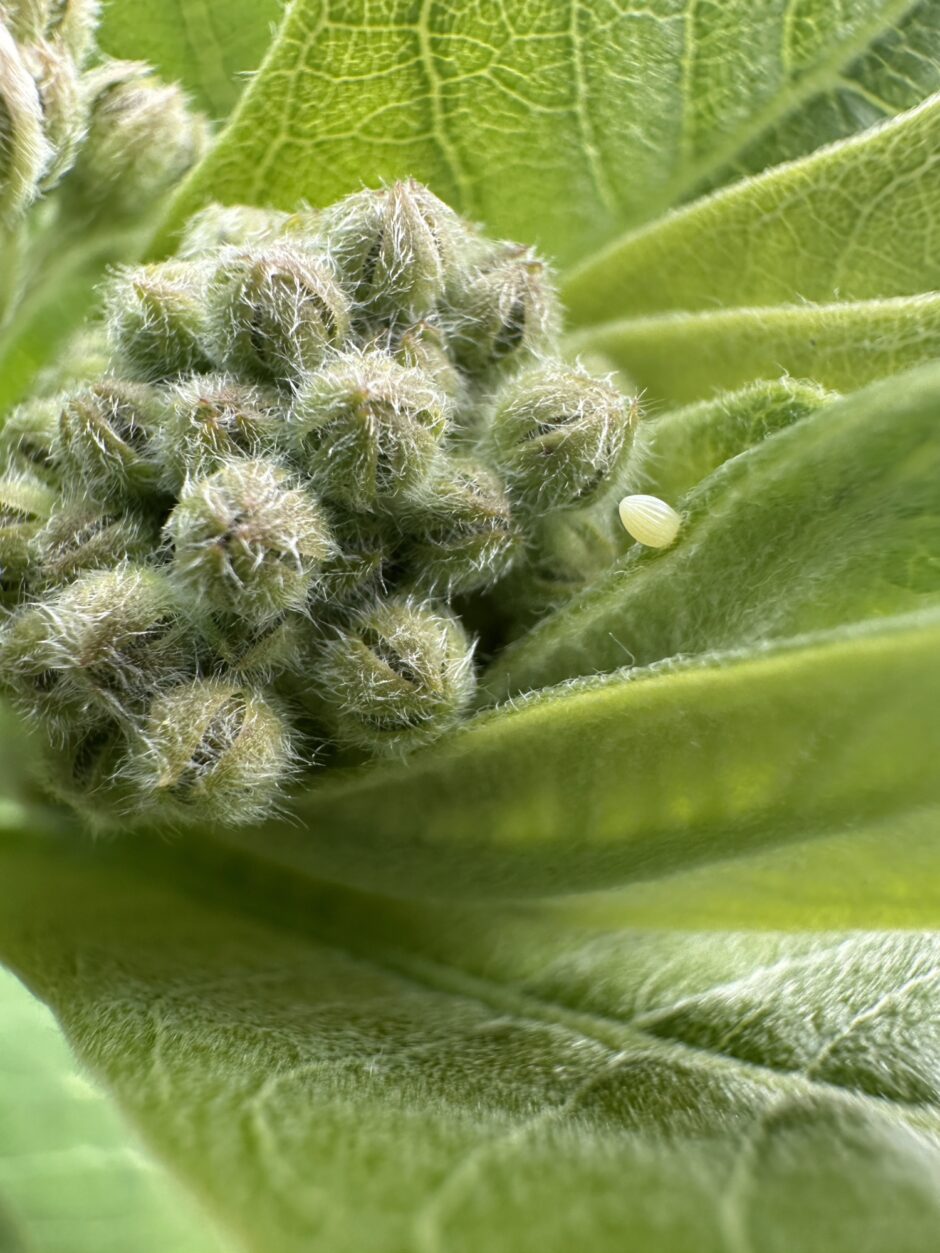
Natalie has really enjoyed her time monitoring for MLMP and is excited when she finds uncommon sightings like a “double lay,” when there are two or more eggs laid on one leaf or close together. She also thinks finding late instar larvae is interesting since she more commonly finds eggs and young larvae. When fourth- or fifth-instar larvae are spotted, it means they are surviving in her created ecosystem. Also, spotting a large number of eggs on one plant and finding eggs on non-leaf parts of milkweed pique her interest.
At her home, Natalie and her family have also been working on transforming her landscape by converting lawn area into pollinator habitat. She has created five additional garden beds and built four raised beds planted with over 70 species of native, ornamental, herbal, and edible plants, amounting to around 150 square feet of pollinator habitat. Native plants include New England aster, prairie blazing star, little bluestem, and prairie dropseed.
In May 2026, Natalie reached out to the Oconto Elementary School about revamping their existing school garden. To create the Community Pollinator Garden at the Discovery Meadow, she has been working with the school to clear the walking paths, remove invasive species, clean out the existing garden beds, and amend the soil for planting. Some of the existing native plants include common milkweed, butterfly milkweed, purple coneflower, and coreopsis. In the fall, there are plans to seed over 40 species with the help of students and teachers at the school.
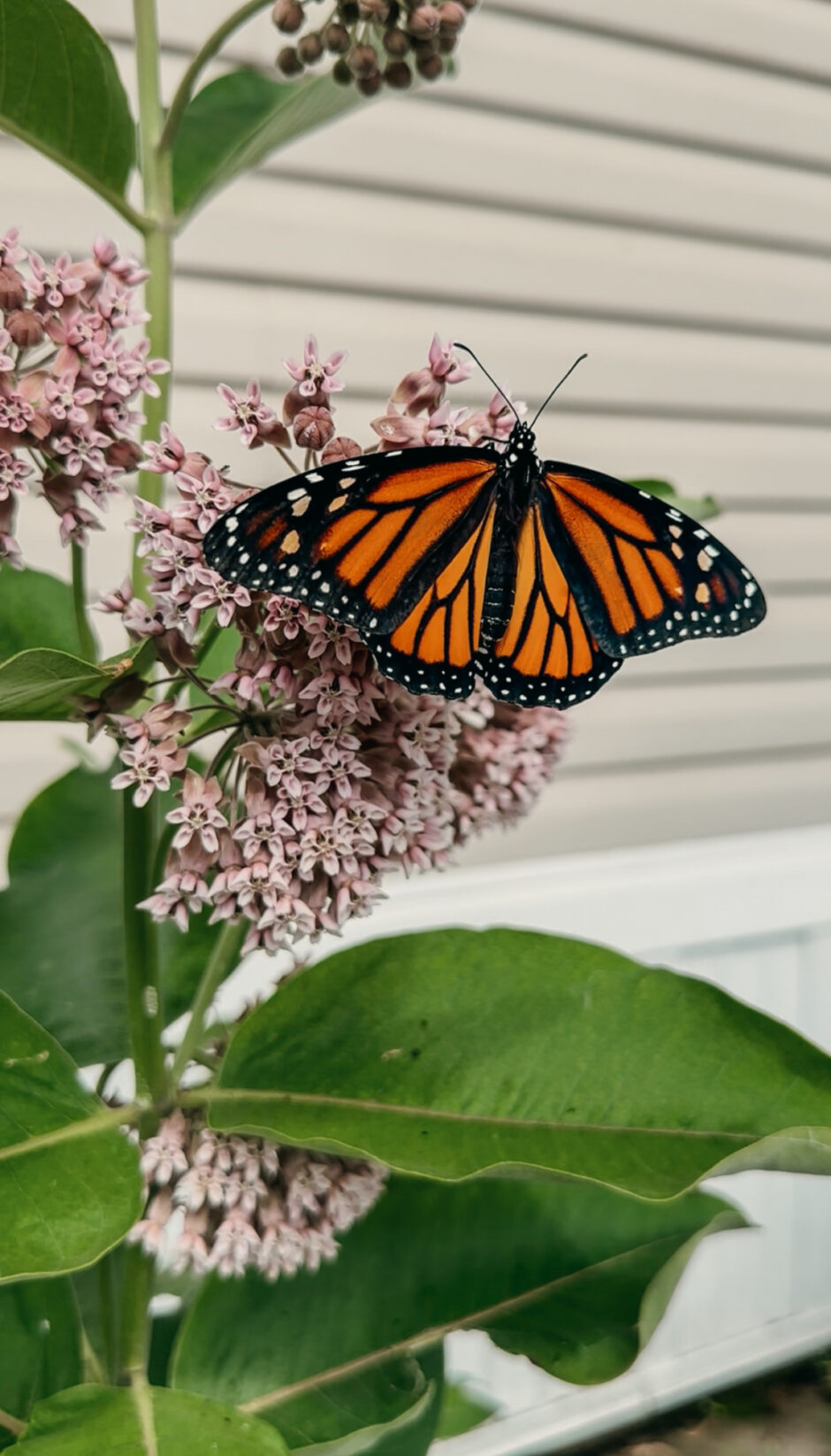
Natalie loves to share her knowledge. She often answers neighbors’ questions about her milkweed patch and monarchs, and when at the school garden, she speaks to the children and families that visit. She has introduced many to seeing monarch eggs and larvae in person for the first time, and their excitement and wonder have brought her so much joy. Natalie has been humbled by all the support and appreciation she gets for her work in the school and community.
This year has been an amazing year for Natalie as she has also launched three interconnected local conservation initiatives. Natalie is the owner of Hippie Homestead LLC, a native landscaping and habitat design business that specializes in transforming lawn spaces into vibrant, sustainable ecosystems using native plants, pollinator gardens, and eco-friendly practices. She is the Founder and Director at Patchwork Pathways WI, a community-powered movement aimed at mapping, planting, and protecting connected native plant habitats across the region, and is also the Manager of Corridor Seed Station, a regional hub dedicated to sustainable monarch conservation and habitat restoration.
Since Natalie is fairly new to MLMP, she wanted to offer this advice to anyone who just started monitoring or who hasn’t taken the plunge just yet: “Don't be intimidated. The information can seem overwhelming in the beginning, but everyone on the MLMP team does a fantastic job of explaining everything in detail and in a way that is easy to follow and comprehend. Once you actually get out into the field conducting the observations, everything comes together. It's really fascinating to be a part of, and soon you may find yourself searching for milkweed and monarchs on all your outings!”
Back to all articles